Featured from CLN
The DEA’s Shift on Marijuana: What You Need to Know
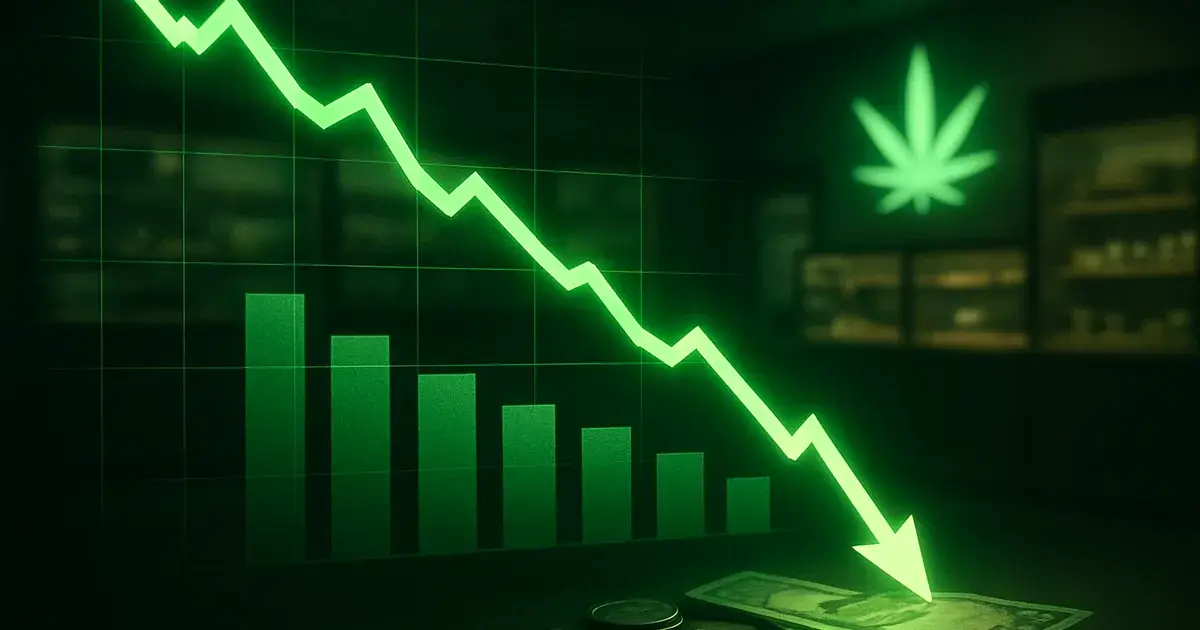
Here is the number every statehouse quietly fears: marijuana tax revenue is now declining in six of the earliest-legalizing states. A widely syndicated analysis (via Arizona Capitol Times; also Dakota Free Press) found collections falling in Alaska, California, Colorado, Nevada, Oregon and Washington.
The quick why: supply has outrun demand in every mature market, prices have collapsed, and most cannabis taxes are set as a percentage of retail price. When wholesale prices crater, a percentage-of-price tax falls right along with them. Revenue is plateauing in Massachusetts, Michigan and Illinois — the six-to-eight-year markets — and still growing in most of the 14 newest states, just more slowly than the early boom.
What falling marijuana tax revenue does to budgets
It breaks promises. Colorado’s marijuana revenue has cratered since 2021, forcing lawmakers to cancel a planned $20 million transfer for school-facility upgrades and repeal a required $3 million annual distribution to a substance-abuse treatment program. Every “legalize it and fund the schools” pitch runs into the same wall about year five, when the market matures and the tax base shrinks (the state’s own marijuana tax data tells the story).
The operator angle
Falling collections are not just a budget problem — they’re a political opening. A state watching cannabis revenue shrink is finally motivated to stop taxing the legal market into the ground while the illicit guys pay nothing. Smart operators use these numbers to push for lower effective tax rates and to argue that over-taxation feeds the very illicit market the tax was supposed to kill. It’s the same maturing-market reality that’s reshaping everything from how new states like Virginia design their programs to how existing operators plan margins — and it’s why the consulting team at Collateral Base models tax and pricing before a client ever signs a lease. For the reform track that could finally cut the federal tax bite, see our coverage of the DEA rescheduling hearing.
The design flaw behind falling marijuana tax revenue
The root problem is a tax base tied to price in a commodity headed for oversupply. When California and Colorado legalized, wholesale flower was expensive and a percentage-of-price tax printed money. Then everyone grew everything, prices collapsed, and the same percentage now applies to a much smaller number. A pound that once carried $2,000 of taxable value might carry a few hundred today. That’s not a demand problem — people are still buying — it’s a pricing problem baked into the tax code.
Newer states have a chance to design around it: weight-based taxes, potency-based taxes, or lower rates that keep the legal market competitive with the illicit one. But most copy the early states’ percentage-of-price model and inherit the same cliff.
Marijuana tax revenue FAQ
Which states are seeing marijuana tax revenue decline? The earliest-legalizing markets — Alaska, California, Colorado, Nevada, Oregon and Washington — with Massachusetts, Michigan and Illinois now plateauing.
Why is cannabis tax revenue falling if sales are steady? Because most cannabis taxes are a percentage of retail price, and oversupply has driven prices down, shrinking the taxable base.
Watch the full episode
Watch the full Cannabis Legalization News episode on YouTube →
Original sources
Evidence
Reporting and primary sources
We have not added a separate source list yet. Use the links in the article above while we finish organizing it.