Featured from CLN
The DEA’s Shift on Marijuana: What You Need to Know
Is THCa legal in Illinois? Starting Thursday, Nov. 12, 2026, a consumable or topical THCa product with more than 0.4 milligrams of total THC per container will no longer qualify as hemp under Illinois law. It is cannabis, and only state-licensed dispensaries may sell it. Sources checked Oct. 23, 2026: the change is enacted and scheduled to take effect Nov. 12; the state says it will enforce on that date even though the matching federal change was pushed to Dec. 11.
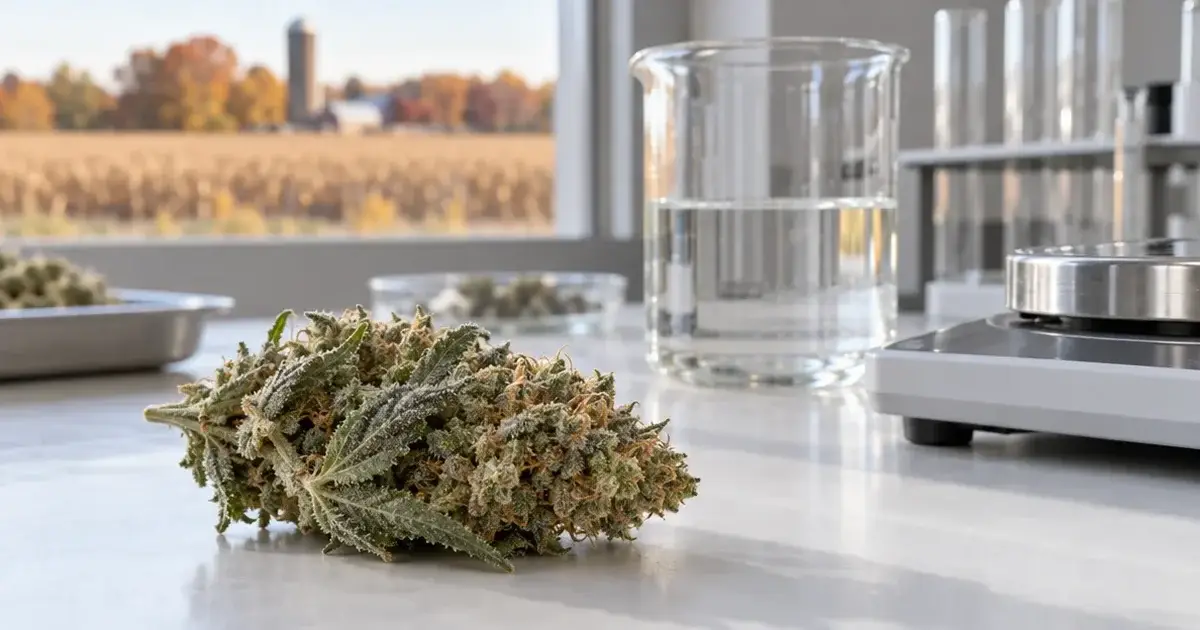
That is a big shift for a product that has been sold in smoke shops, gas stations and convenience stores across the state. Here is what the new rules say, what still counts as legal hemp, and what the state has and has not said about adults who already have THCa products at home.
The short answer: THCa is counted as THC
THCa products have been marketed as hemp by reference to the 2018 federal definition’s delta-9 THC threshold. That was not a blanket permission to grow or sell high-THCa products. The USDA hemp-production FAQ explains that preharvest compliance testing already accounts for THCa’s potential conversion to delta-9 THC. Illinois’ new definition expressly counts THCa in its total-THC limit.
The Illinois Department of Agriculture’s June 2026 bulletin on the Illinois Hemp Act explains that the Industrial Hemp Act is repealed and replaced on Nov. 12, 2026. Under the new definition, a hemp plant must test at no more than 0.3% total THC on a dry-weight basis, and total THC “includes both delta-9 THC and THCa.”
The Illinois Department of Revenue’s Informational Bulletin FY 2027-04 applies the same idea to finished products. From Nov. 12, a consumable or topical product with more than 0.4 mg of total THC per container, including THCa, no longer meets the definition of hemp. Delta-8 THC, THC-P, HHC and THC-O count toward that limit too. The new law is Public Act 104-0463, which started as Senate Bill 3222.
THCa flower, vapes and edibles: what changes on Nov. 12
- THCa flower. Flower is measured by total THC, THCa included. Flower above 0.3% total THC is not hemp under the new definition. Under IDOR’s criteria, a hemp product sold to consumers also cannot be intended for smoking or vaping.
- THCa and delta-8 vapes. Same rule: consumer hemp cannabinoid products may not be intended for vaping. Synthetic cannabinoids and plant cannabinoids made outside the plant are excluded as well.
- Gummies, drinks and other edibles. More than 0.4 mg of total THC (and similar cannabinoids) per container means the product is cannabis. IDOR also says consumer hemp products may not contain alcohol, tobacco or nicotine.
- Low-THC hemp products. Products that stay at or under 0.4 mg per container and meet the rest of the Illinois Hemp Act can still be sold as hemp, with lab testing, a QR code to the certificate of analysis and child-resistant packaging.
We break down the seller side, including what IDOR tells shops to do with existing inventory, in our guide to the Illinois hemp THC limit.
Where THCa products can be sold after Nov. 12
Products classified as cannabis may be sold only through the licensed cannabis system. IDOR’s bulletin says products over the limit may be grown only by Illinois Department of Agriculture-licensed cultivators and sold only by dispensaries licensed by the Illinois Department of Financial and Professional Regulation. All products and businesses must meet Cannabis Regulation and Tax Act requirements; changing the storefront alone does not establish compliance. A business without a Cannabis Regulation and Tax Act license that possesses these products with intent to sell risks civil and criminal violations, product seizure, and tax, penalty and interest under 410 ILCS 705/65-38, according to the bulletin.
The state’s own cannabis FAQ puts it in one line: “Only licensed cannabis businesses may sell cannabis.”
The age rule already changed in June
One part of the law did not wait for November. According to the IDOA bulletin, the age limits took effect immediately when the governor signed the law on June 12, 2026. Products with more than 0.4 mg of THC or similar cannabinoids may be sold only to people over 21, and the seller must check ID for anyone who appears to be under 30.
What about THCa you already own?
Personal possession raises a separate question. The IDOR and IDOA bulletins address growers, manufacturers and sellers; neither provides consumer-specific transition instructions for THCa products already owned. The general possession limits below do not, by themselves, resolve every product or possession question.
What the state has published is the general rule for adults 21 and over. Under SB 3222, possession limits doubled on June 12, 2026, according to the IDFPR fact sheet dated June 23, 2026 and the state’s cannabis FAQ:
| Adults 21+ | Illinois residents | Nonresidents |
|---|---|---|
| Cannabis flower | 60 grams | 30 grams |
| THC in cannabis-infused products | 1,000 mg | 500 mg |
| Cannabis concentrate | 10 grams | 5 grams |
The limits are cumulative across the three categories. The state’s FAQ also says cannabis in a moving vehicle must be in a sealed, odor-proof, child-resistant container, may not be used in public places and “should not be transported across state lines.” If you have a specific question about products you already own, get advice for your situation; this article is not that.
Why the Illinois date is earlier than the federal date
Congress rewrote the federal hemp definition in Public Law 119-37, signed Nov. 12, 2025, and the change was set to apply a year later. In September, the Continuing Appropriations and Extensions Act, 2027 (Public Law 119-103, Section 2019) limited what applies before Dec. 11, 2026. Section 2019 leaves the exclusions for cannabinoids the plant cannot naturally produce on the Nov. 12 schedule; the remaining amendments, including the new total-THC limits, follow on Dec. 11 under that enacted timetable.
Illinois kept its own date. IDOR says the state “plans to begin enforcement of the Illinois Hemp Act on November 12, 2026, regardless of the federal government’s delay.” For how the federal rules treat THCa, delta-8 and delta-9 nationwide, see our hemp THC laws hub. Businesses sorting out what the federal delay means for them can read the Cannabis Industry Lawyer guide to the Dec. 11 hemp deadline.
Quick answers
Is THCa legal in Illinois today? A THCa label alone does not establish legality. Before the Nov. 12 definition change, existing production, product and sales rules still matter; Illinois also imposed age-verification and labeling requirements in June.
Is THCa legal in Illinois after Nov. 12? THCa products over 0.4 mg total THC per container, and THCa flower over 0.3% total THC, are cannabis. Only licensed dispensaries may sell them.
Can a smoke shop or gas station keep selling THCa? Not products over the limit, unless it holds the required cannabis license. The state’s guidance tells businesses to review inventory now.
Does this change dispensary labels? Separately, yes. See Illinois cannabis label requirements for 2026.
Related coverage
For the rest of the law that made these changes, read our coverage of the Illinois cannabis omnibus, SB 3222, and follow dated updates on our Illinois cannabis law guide.
Original sources
- Illinois Department of Revenue, Informational Bulletin FY 2027-04: Hemp Product Changes, Effective November 12, 2026 (Oct. 2026)
- Illinois Department of Agriculture, Informational Bulletin IB-2026-06: Illinois Hemp Act overview (June 2026)
- IDFPR, SB 3222 fact sheet for dispensary licensees (June 23, 2026)
- State of Illinois, Cannabis FAQs
- Public Law 119-103, Division B, Section 2019
By Thomas Howard, cannabis attorney. Thomas holds Illinois cannabis retail interests. This article is general information, not legal advice.
Evidence
Reporting and primary sources
We have not added a separate source list yet. Use the links in the article above while we finish organizing it.