Featured from CLN
The DEA’s Shift on Marijuana: What You Need to Know
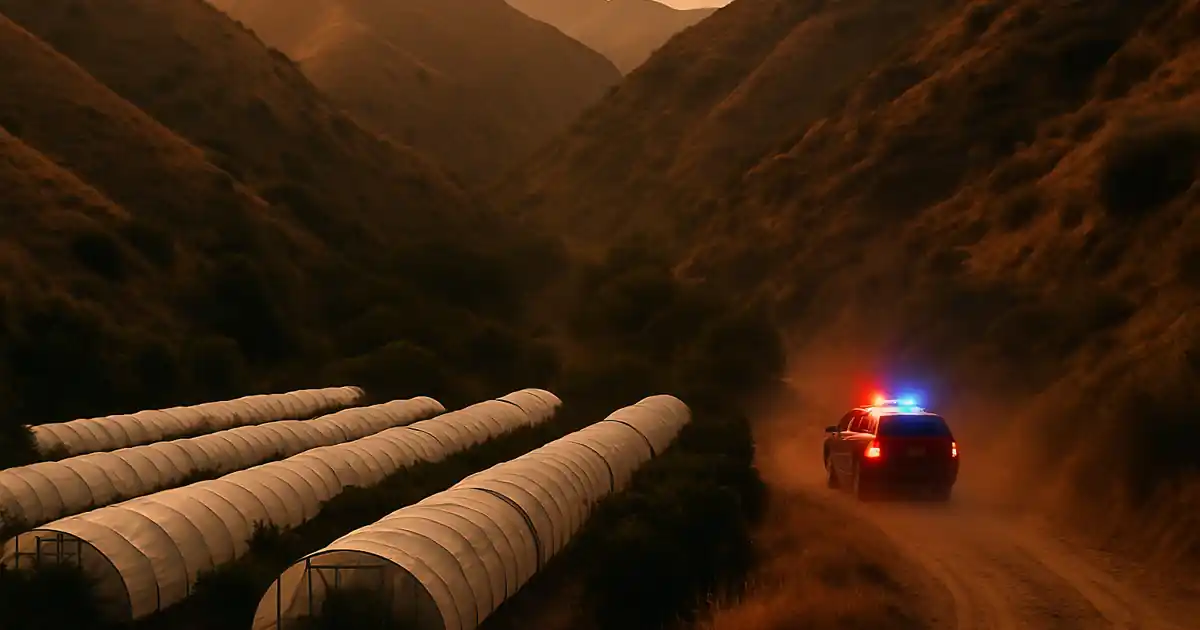
Ten years after Prop 64, the California cannabis map has a pattern you can see from space: the illegal grows cluster where the legal ones are banned. New Department of Cannabis Control data — obtained and first reported by State Affairs, and covered by Marijuana Moment — shows that 96.6 percent of illicit marijuana seized by the state’s Unified Cannabis Enforcement Taskforce in unincorporated areas between October 2022 and August 2025 came from just eight counties, almost all of which ban licensed cultivation.
DCC Director Clint Kellum said the quiet part into a microphone: “cannabis is used in every community, regardless of local rules,” and while localities can ban licensed shops, “they cannot eliminate consumer demand.” His conclusion: “When local governments deny consumers access to licensed retailers, the illicit market and organized crime benefit, while public health and safety is harmed.”
The enforcement numbers behind the California cannabis data
Days before the county data dropped, Governor Newsom’s office touted the taskforce’s second quarter: 63,000 pounds of illicit cannabis seized, worth more than $104 million, and 89,000-plus plants destroyed from April to June — over 841,000 pounds since the taskforce launched in 2022, or “420 tons,” a number the governor’s office absolutely noted on purpose. The state also just spread nearly $15 million in Prop 64 grants to local governments for enforcement, including about $1 million to the city of Ceres to stand up a cannabis enforcement unit (Press Democrat).
Step back and the loop is almost elegant: counties ban licensed cultivation → demand persists → illegal grows fill the vacuum → the state spends millions raiding the counties that created the vacuum. Prohibition doesn’t eliminate the market; it selects the vendor. We’ve watched the same dynamic in every state we cover — it’s the argument Pennsylvania Democrats are making as they force a legalization vote, and the inverse of Ohio’s attempt to ban its way out of the hemp-drink market.
Why operators and policymakers should care
For operators, ban counties aren’t neutral territory — they’re subsidized competition, since your illicit rival pays no taxes, no testing and no compliance while your customers drive past his county on the way to your store. For policymakers, the 96.6 percent figure is the cleanest natural experiment California has produced: local control was supposed to protect communities and instead became the illicit market’s business plan. The same maturing-market pressures squeezing state cannabis tax revenue make fixing this urgent — a legal market that can’t open stores can’t generate the receipts legalization promised.
The numbers, in one place
Because the figures scattered above deserve a scoreboard: 96.6 percent of UCETF’s unincorporated-area seizures came from eight ban counties (October 2022 through August 2025). Second quarter 2026 alone: 63,000 pounds seized, $104 million-plus in value, 89,000 plants destroyed. Program to date: more than 841,000 pounds — 420 tons — since 2022. Grant money flowing back out to local enforcement: nearly $15 million this cycle, roughly $1 million of it to a single mid-sized city, Ceres, to stand up a dedicated cannabis code-enforcement unit.
Ten years in, the honest read on Prop 64 is that California built a world-class legal supply chain and then let a majority of its own jurisdictions refuse to host it. Roughly two-thirds of California cities and counties still ban some or all licensed cannabis businesses, which is why the state’s illicit market remains, by most estimates, as large as its legal one. Both gubernatorial candidates say they support legalization; neither has proposed the one reform the DCC data begs for — conditioning state funds or preemption on local retail access, the way housing law now treats cities that refuse to zone. Until someone does, the taskforce will keep harvesting the same eight counties, 420 tons at a time.
Watch the full episode
Watch the full Cannabis Legalization News episode on YouTube →
Original sources
Evidence
Reporting and primary sources
We have not added a separate source list yet. Use the links in the article above while we finish organizing it.