Featured from CLN
The DEA’s Shift on Marijuana: What You Need to Know
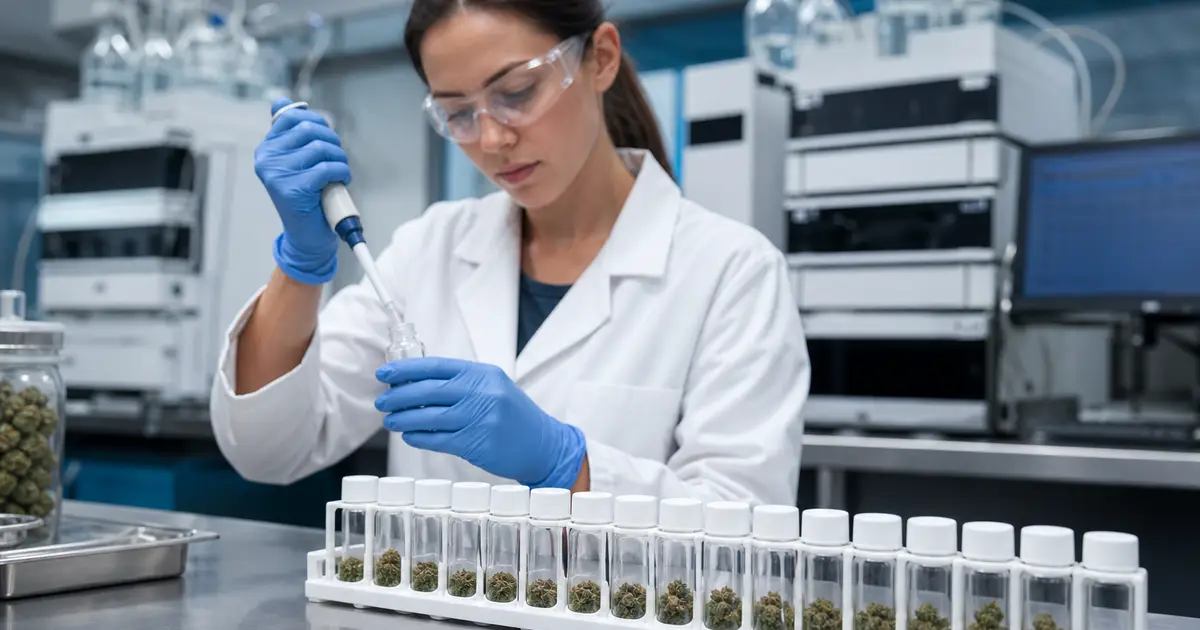
Massachusetts regulators pulled 63 cannabis flower products off retail and dispensary shelves, sent them to independent labs, and checked whether the THC number on the label was real. Thirteen came back outside the acceptable range. The Massachusetts THC potency audit, announced August 13, 2026, is the first shelf audit of its kind in the state — and the tolerance band it used was generous enough that failing it takes some doing.
In this article
- How the Massachusetts THC potency audit worked
- What happens to the products
- Two things this audit does not say
- The lab integrity thread underneath
- Why this matters beyond Massachusetts
- Watch the full episode
- Original sources
How the Massachusetts THC potency audit worked
The Cannabis Control Commission collected 63 flower products from 62 producers at retail stores and medical dispensaries, then distributed them among the state’s 10 Independent Testing Laboratories for verification.
The pass/fail band accounts for the fact that cannabis is a plant and potency drifts on the shelf: a label is treated as accurate if the tested result lands between 75% and 125% of the labeled figure. A product labeled 15% THC passes anywhere from 11.25% to 18.75%. That is a wide net. Thirteen products still missed it, and only seven of the 63 landed within 2% of their labeled potency.
Chris Harding, Chair of the Commission, put it in consumer-protection terms: “The Commission has a responsibility as a regulatory and consumer protection agency to ensure product labels are accurate. This is also a matter of health and safety for medical marijuana patients who rely on potency for accurate dosing. This audit represents a step forward in our efforts to enhance our oversight to maintain trust in the adult-use and medical marijuana markets.”
What happens to the products
The Commission began notifying producers Thursday, August 13 and placed holds on the noncompliant products to stop further sales. Producers must choose one of four paths: recall and repurpose with new testing, recall and relabel using the audit result, retest, or destroy.
Retailers are explicitly off the hook. The Commission states that marijuana retailers and medical dispensaries are not responsible for product label accuracy, though they may choose to remove and destroy affected products. If you are a budtender, this is not on you.
Two things this audit does not say
Be careful here, because this story is easy to over-read. First, neither the Commission nor its release states whether the 13 failures were over-labeled or under-labeled. The satisfying “your 30% flower is really 18%” conclusion is not supported by the published findings. Potency could have run high or low, and nobody has said which.
Second, this was a targeted shelf audit, not a random sample. It does not support a claim that one-fifth of all Massachusetts cannabis is mislabeled. The Commission was explicit that the audit will help it “calibrate future audits as we move toward random testing for contaminants of concern, including pesticides, heavy metals, yeast and mold, and bacteria” — meaning random testing has not happened yet.
Product and producer names are not public yet either. Notices are going out on a rolling basis and will be posted for public review through the Commission’s enforcement portal.
The lab integrity thread underneath
The more serious story is who does the testing. Executive Director Travis Ahern described the audit as “the continuing work of our internal testing task force, which we created to focus on testing issues as part of our mission to oversee a safe, equitable cannabis marketplace in Massachusetts.”
That same task force previously issued a Summary Suspension Order to Assured Testing Laboratories after a monthslong investigation into falsified test results, resolved through a stipulated agreement that included a fine and a major overhaul of the laboratory’s personnel and policies. Potency inflation is not primarily a rounding problem — it is a lab incentive problem, in a market where growers shop for the lab that returns the best number.
A public hearing on testing regulations is set for August 25, 2026, with a broader regulatory update beginning in September.
Why this matters beyond Massachusetts
Every legal market prices flower off a THC percentage that consumers over-trust and regulators rarely verify. Massachusetts just verified, publicly, with a 20% miss rate inside a forgiving band. Expect other states to copy the shelf-audit format — and expect the operators who have been quietly buying favorable COAs to have a harder year. That pressure lands at the same moment prices are collapsing in mature markets like Illinois, where the temptation to inflate a number to justify a price is strongest.
Watch the full episode
Prefer to watch on YouTube? The Future of Dispensaries in Schedule III.
Original sources
- Massachusetts Cannabis Control Commission — Releases Potency Audit Results
- Massachusetts CCC — Commission to Begin Auditing THC Potency on Labels
- The Marijuana Herald — Massachusetts Cannabis Regulators Release THC Potency Audit Results
This article is general information, not legal advice.
Evidence
Reporting and primary sources
We have not added a separate source list yet. Use the links in the article above while we finish organizing it.